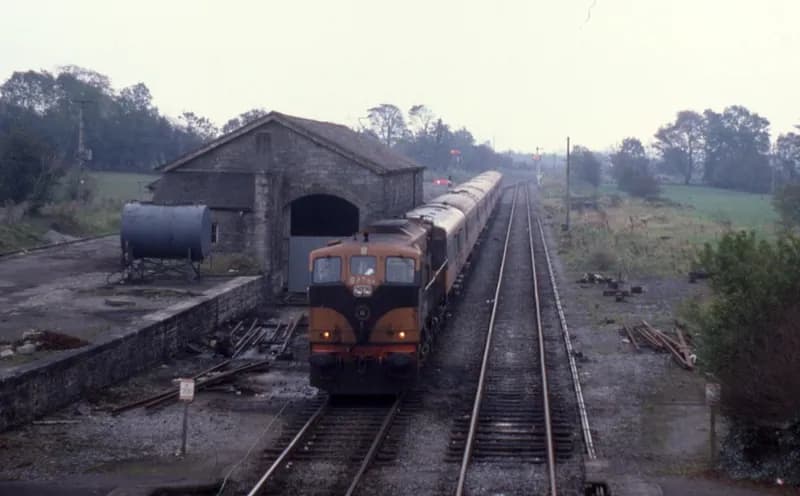
65 yearsCastlerea Railway Station
0 m N
Phil Richards · 1985 · CC BY-SA 2.0
Níl an leathanach seo ar fáil i nGaeilge fós. Tá sé á thaispeáint i mBéarla.
Léigh i mBéarla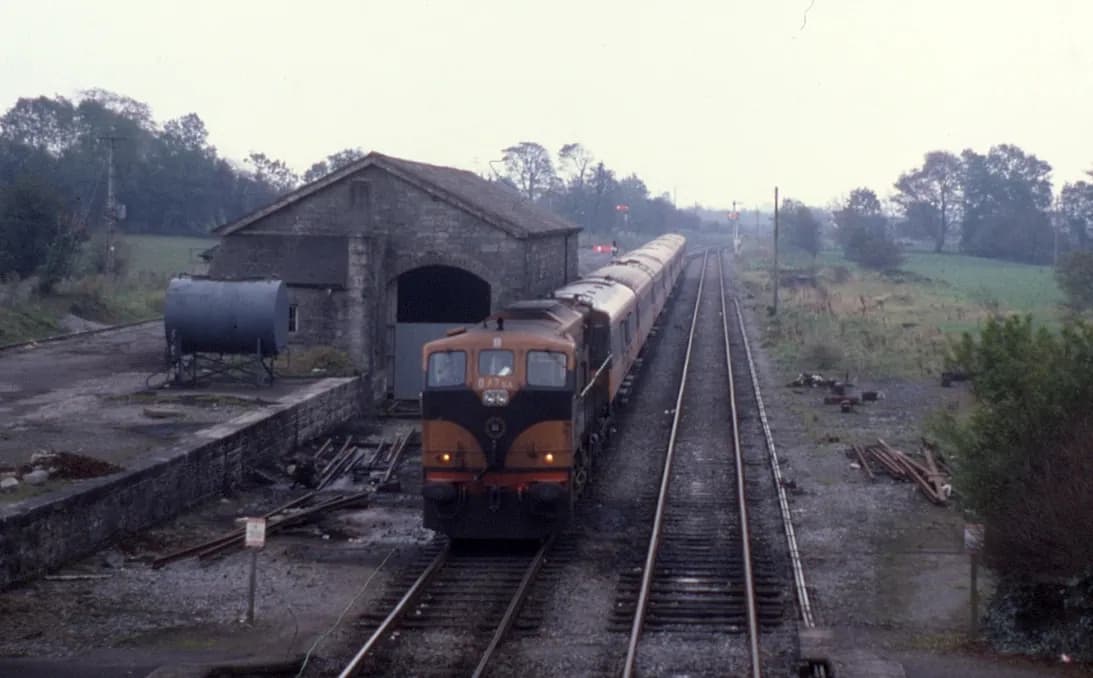
The State's own record says a company built this 65 years too early.
Phil Richards · 1985 · CC BY-SA 2.0 · ark:/99999/c4rly
NIAH-31814046 · STATUTE-GSR-1925
From where you are standing, 3 things to find
The signal box: brick below, timber boarding and glass above, reached by cast-iron steps.
The water tower, random-coursed stone with a cast-iron tank on top, its ladder and measure still in place.
The level crossing gates: timber, wheel-operated, with cast-iron fittings on cut stone piers, and cast-iron lamps.
The national inventory describes this complex as "built c.1860 by Great Southern Railways as part of the Sligo-Westport line."
Great Southern Railways did not exist in 1860. It was created by the Great Southern Railways Amalgamation Scheme of 1925, under the Railways Act 1924.
Two sources disagree
Built c.1860 by Great Southern Railways as part of the Sligo-Westport line.
National Inventory of Architectural Heritage · read 2026-08-01Great Southern Railways was constituted in 1925 and cannot have built anything in 1860.
Irish Statute Book · read 2026-08-01A tier 1 source is wrong. We publish the correction, cite both, and report it upstream rather than repeating the error in nine languages.
This is why the corpus exists. A platform that copies the inventory verbatim would carry the mistake into every language and into the voice guide.
National Inventory of Architectural HeritageIrish Statute Book
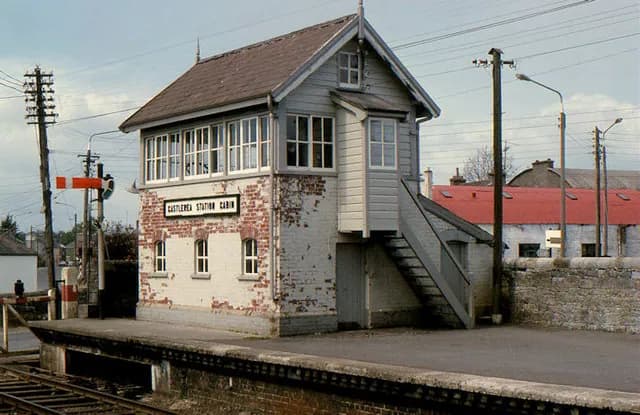
Albert Bridge · CC BY-SA 2.0
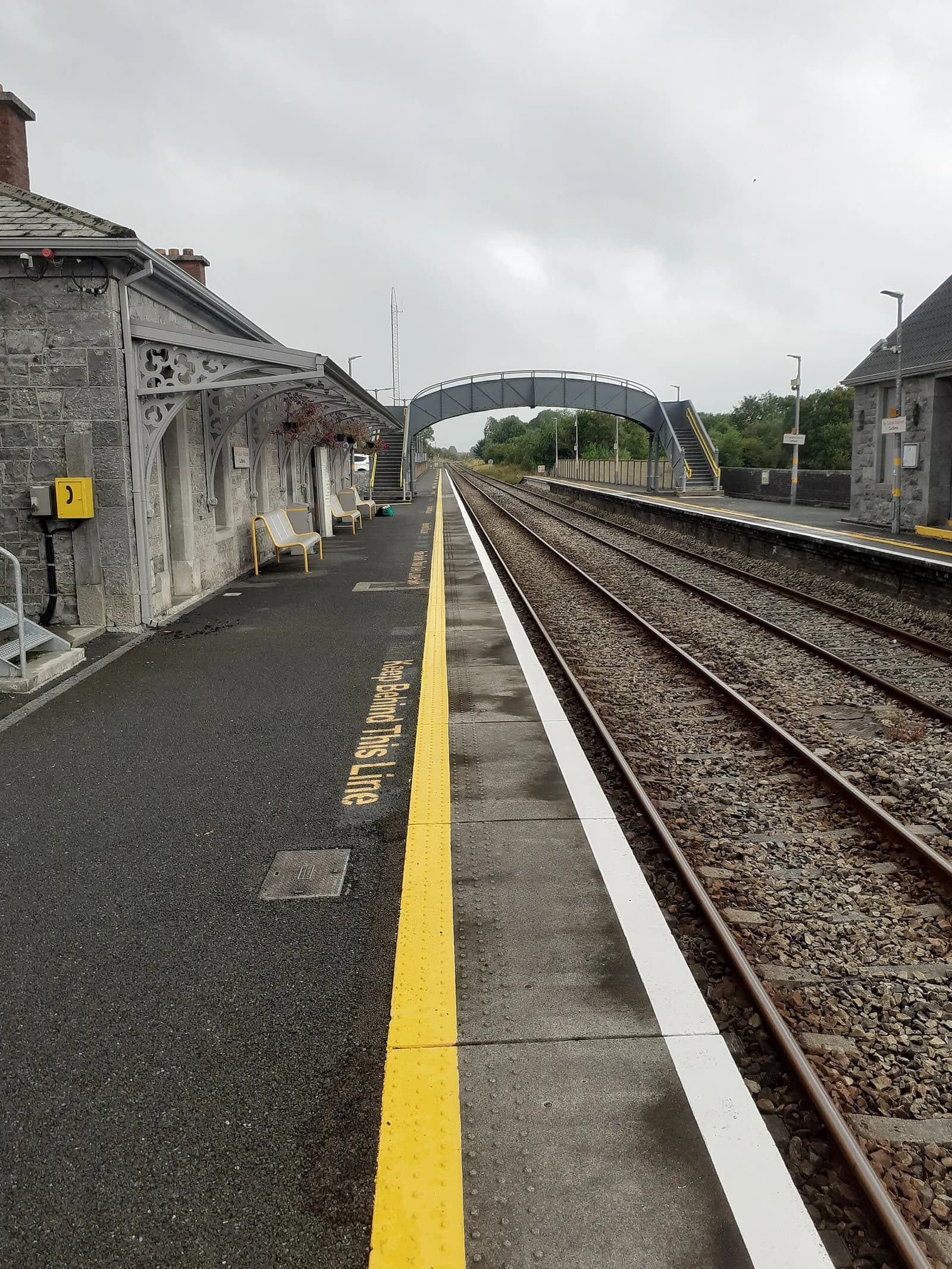
Darren J. Prior · CC BY-SA 4.0
The signal cabin in 1982, and the platform in 2019. Everything the inventory lists as surviving fabric — the timber and glass cabin, the cast-iron steps — was photographed by a passing enthusiast four decades ago, and nobody has photographed it since.


The record · ark:/99999/c4rly
Drag to move · two fingers on a phone
Phil Richards · 1985 · CC BY-SA 2.0
No photograph of this exists. The land from above, at its own coordinates.
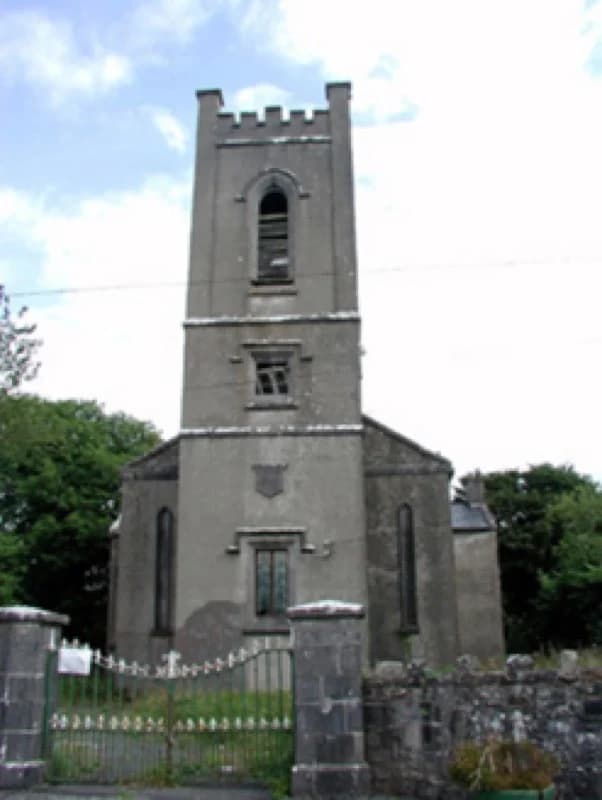
National Inventory of Architectural Heritage · NIAH survey · © Department of Housing, Local Government and Heritage. Reproduced for educational use with credit.
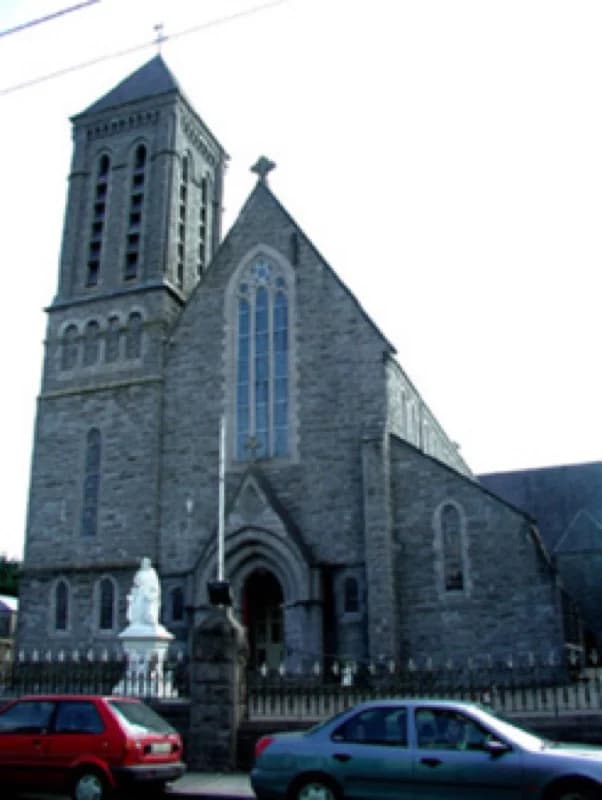
National Inventory of Architectural Heritage · NIAH survey · © Department of Housing, Local Government and Heritage. Reproduced for educational use with credit.
No photograph of this exists. The land from above, at its own coordinates.
No photograph of this exists. The land from above, at its own coordinates.
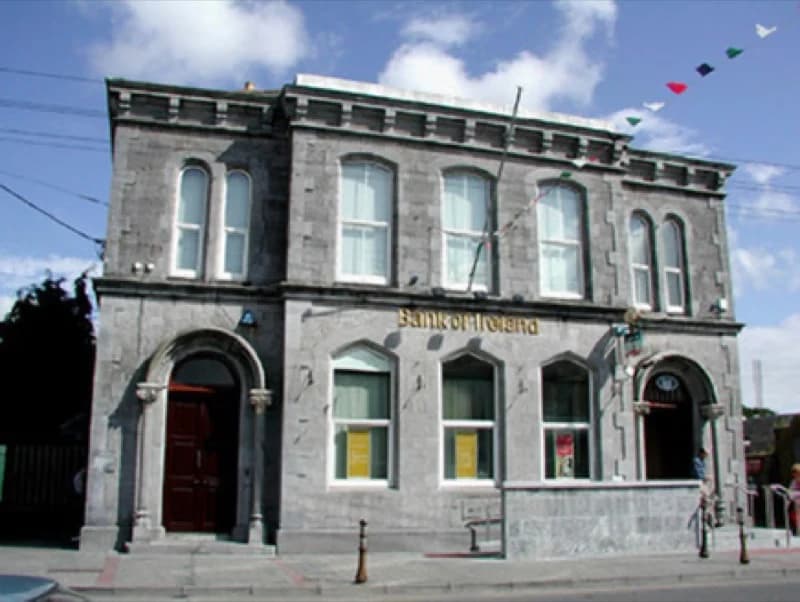
National Inventory of Architectural Heritage · NIAH survey · © Department of Housing, Local Government and Heritage. Reproduced for educational use with credit.
No photograph of this exists. The land from above, at its own coordinates.
No photograph of this exists. The land from above, at its own coordinates.
No photograph of this exists. The land from above, at its own coordinates.
No photograph of this exists. The land from above, at its own coordinates.
No photograph of this exists. The land from above, at its own coordinates.
No photograph of this exists. The land from above, at its own coordinates.
No photograph of this exists. The land from above, at its own coordinates.
No photograph of this exists. The land from above, at its own coordinates.
No photograph of this exists. The land from above, at its own coordinates.
No photograph of this exists. The land from above, at its own coordinates.
No photograph of this exists. The land from above, at its own coordinates.
No photograph of this exists. The land from above, at its own coordinates.
No photograph of this exists. The land from above, at its own coordinates.
No photograph of this exists. The land from above, at its own coordinates.
No photograph of this exists. The land from above, at its own coordinates.
No photograph of this exists. The land from above, at its own coordinates.
No photograph of this exists. The land from above, at its own coordinates.
Part of a thread
Every thread